

The Grumman A-6 Intruder is an American twinjet all-weather attack aircraft developed and manufactured by American aircraft company Grumman Aerospace and formerly operated by the U.S. Navy and U.S. Marine Corps.

The Grumman A-6 Intruder is an American twinjet all-weather attack aircraft developed and manufactured by American aircraft company Grumman Aerospace and formerly operated by the U.S. Navy and U.S. Marine Corps.
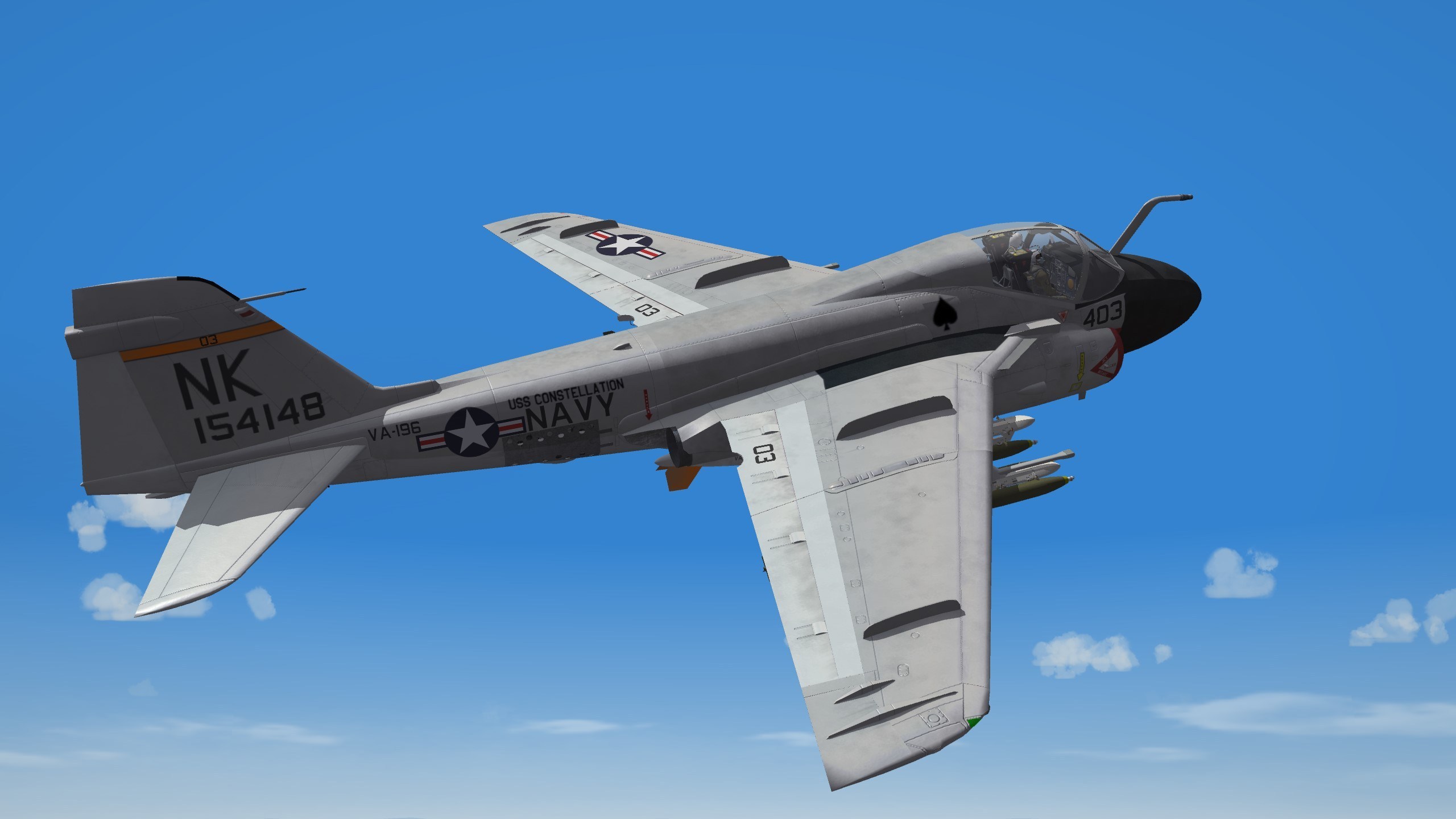
Grumman A-6 Intruder
The Grumman A-6 Intruder is an American twinjet all-weather attack aircraft developed and manufactured by American aircraft company Grumman Aerospace and formerly operated by the U.S. Navy and U.S. Marine Corps.
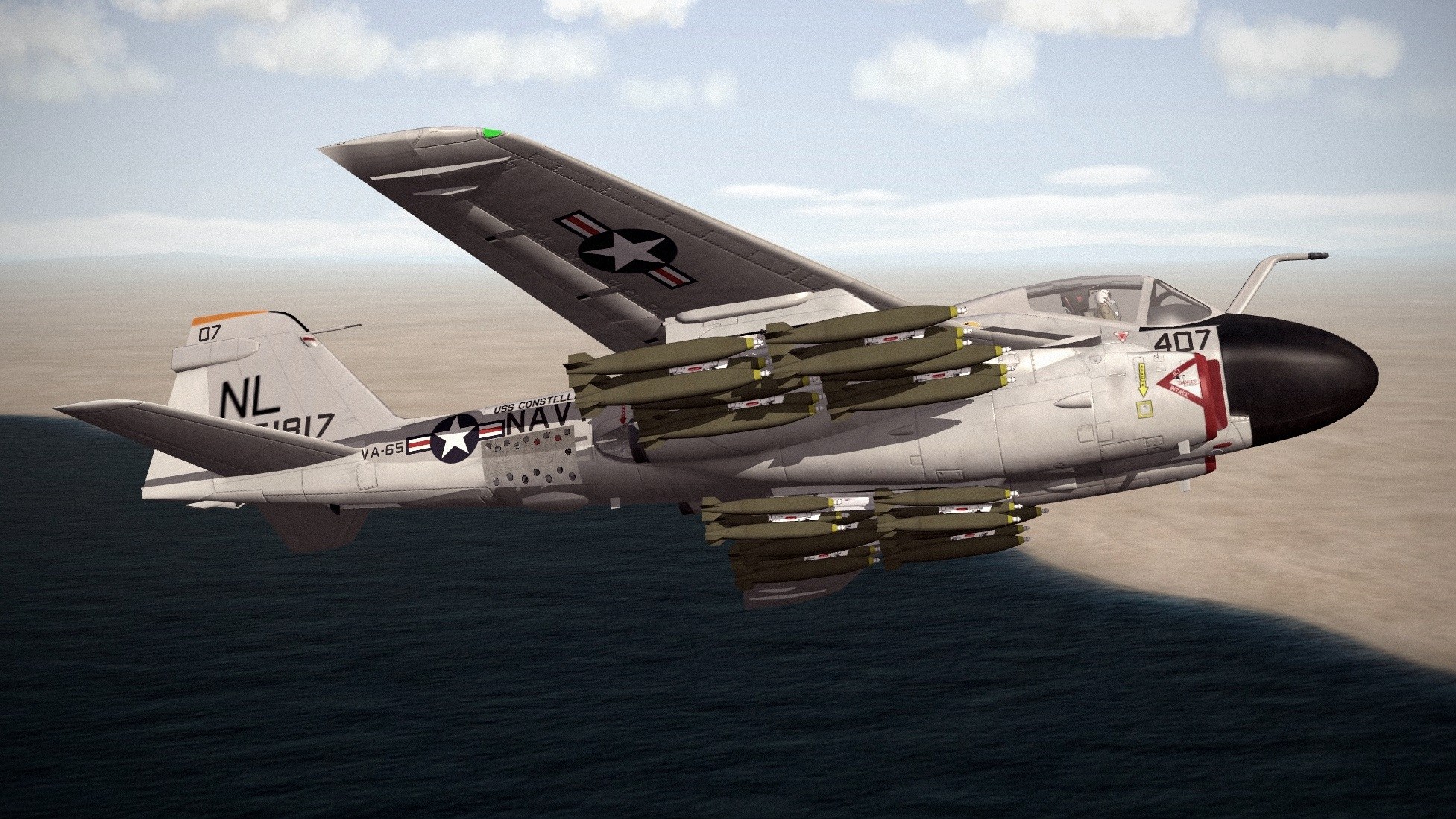
The Grumman A-6 Intruder is an American twinjet all-weather attack aircraft developed and manufactured by American aircraft company Grumman Aerospace and formerly operated by the U.S. Navy and U.S. Marine Corps.
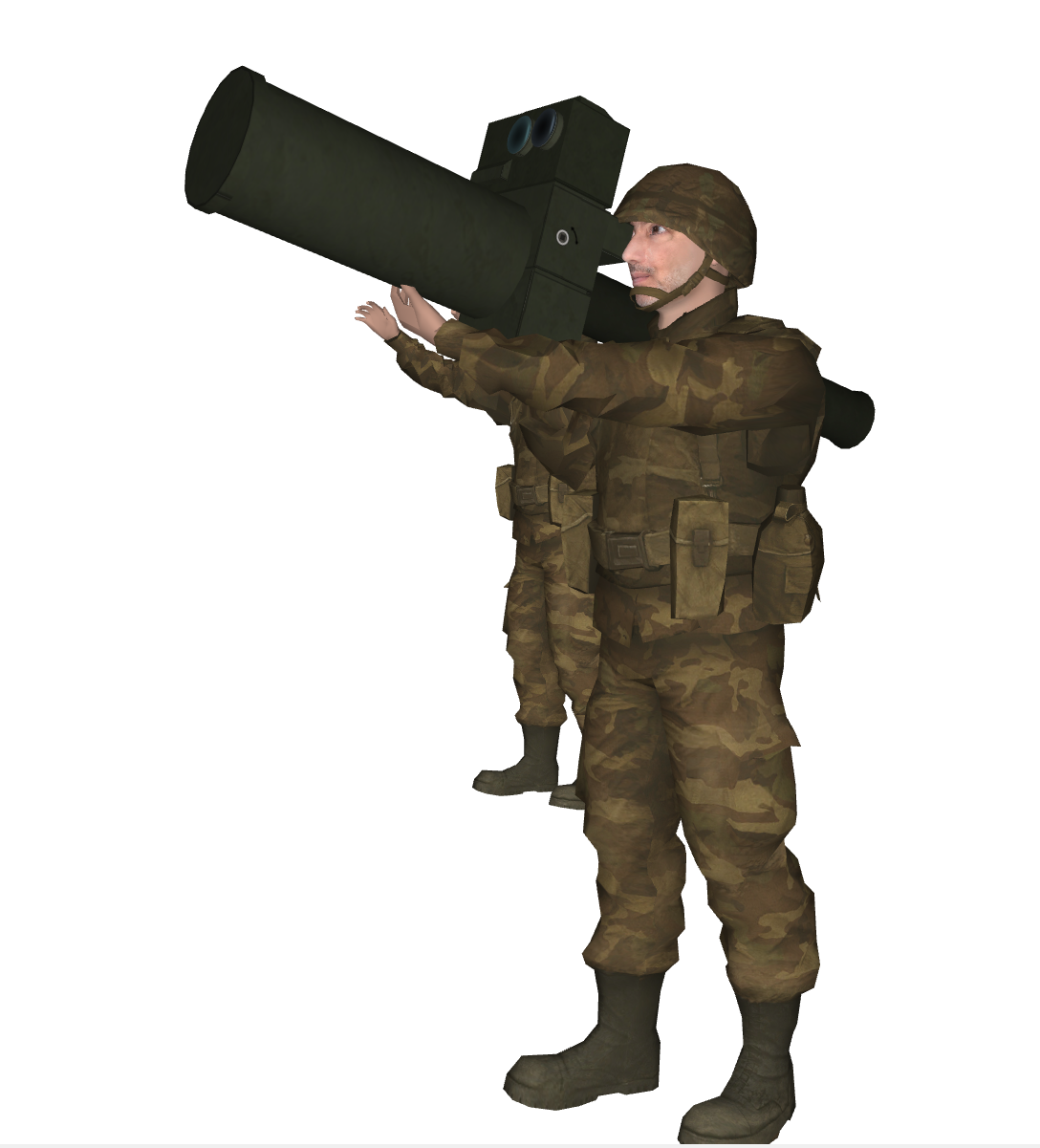
The Shorts Blowpipe is a man-portable surface-to-air missile that was in use with the British Army and Royal Marines from 1975 to 1985. It also saw service in other military forces around the world. Most examples were retired by the mid-1990s.

An Air Base Precision Approach Radar (PAR) is a military radar system that provides detailed guidance to an aircraft during a landing approach, especially in poor visibility. A specially trained air traffic controller monitors a short-range radar display and issues verbal commands to the pilot to correct their horizontal (azimuth) and vertical (elevation) paths to the runway threshold. Unlike ILS systems, PAR relies entirely on the controller’s instructions, with no onboard equipment required on the aircraft. PAR is primarily used at military airbases but can also be used for practice approaches at some civilian locations and remains a critical tool for emergency landings.


An Air Base Approach Light system, or Approach Lighting System (ALS), provides pilots with visual guidance during the approach to a runway, especially in low visibility or at night. It consists of a series of lights and signals, including central line lights, crossbars, and flashing lights, that help pilots align their aircraft with the runway centerline and maintain the correct descent path. ALS transitions pilots from instrument flight to visual flight and is classified by its complexity and length, with different systems for precision and non-precision instrument runways, and is designed to comply with international (ICAO) and national standards.

The Dassault Rafale, literally meaning “gust of wind”, or “burst of fire” in a more military sense. It is a French twin-engine, canard delta wing, multirole fighter aircraft designed and built by Dassault Aviation. Equipped with a wide range of weapons, the Rafale is intended to perform air supremacy, interdiction, aerial reconnaissance, ground support, in-depth strike, anti-ship strike, and nuclear deterrence missions. It is referred to as an “omnirole” aircraft by Dassault.

The Eurofighter Typhoon is a European multinational, twin-engine, supersonic, canard-delta wing, multirole fighter. The Typhoon was originally designed as an air-superiority fighter and is manufactured by a consortium of Airbus, BAE Systems, and Leonardo, which conducts the majority of the project through a joint holding company, Eurofighter Jagdflugzeug GmbH. The NATO Eurofighter and Tornado Management Agency, representing the UK, Germany, Italy, and Spain, manages the project and is the prime customer.
Eurofighter Typhoon 2000 with 2 textures set Kuwait and Qatar. Thirdwire: Strike Fighters 2

Bayraktar TB2 is a medium-altitude long-endurance unmanned combat aerial vehicle capable of remotely controlled or autonomous flight operations. It is manufactured by the Turkish company Baykar Makina Sanayi ve Ticaret A.Ş., primarily for the Turkish Armed Forces.
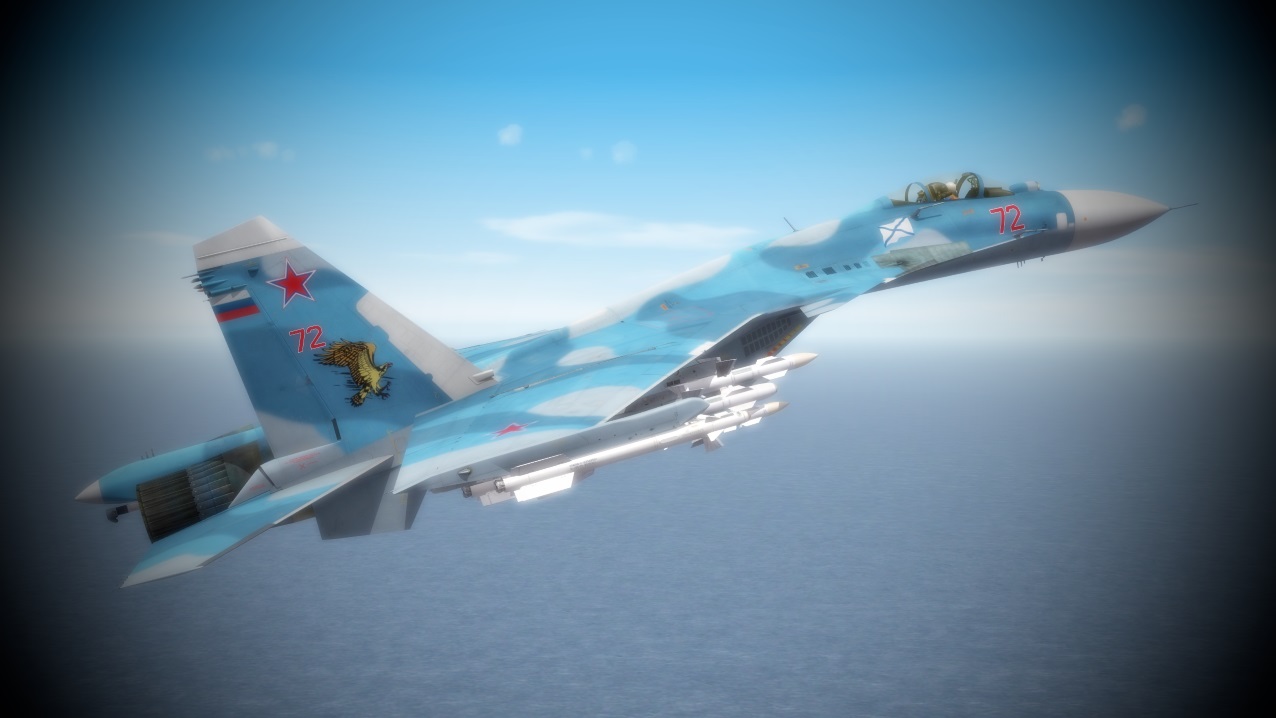
The Sukhoi Su-33 (Russian: Сухой Су-33; NATO reporting name: Flanker-D) is a Soviet/Russian all-weather carrier-based twin-engine air superiority fighter designed by Sukhoi and manufactured by Komsomolsk-on-Amur Aircraft Production Association, derived from the Su-27 and initially known as the Su-27K. Compared with the Su-27, the Su-33 has a strengthened undercarriage and structure, folding wings and stabilators, all for carrier operations. The Su-33 has canards, and its wings are larger than the Su-27 for a slower stall speed. The Su-33 has upgraded engines and a twin nose wheel, and is air-refuelable.

The Sukhoi Su-35 (Russian: Сухой Су-35; NATO reporting name: Flanker-E/M, occasionally nicknamed “Super Flanker” is the designation for two improved derivatives of the Su-27 air-defence fighter. They are single-seat, twin-engine, supermaneuverable, 4.5 generation air superiority fighters, designed by the Sukhoi Design Bureau and built by Sukhoi.
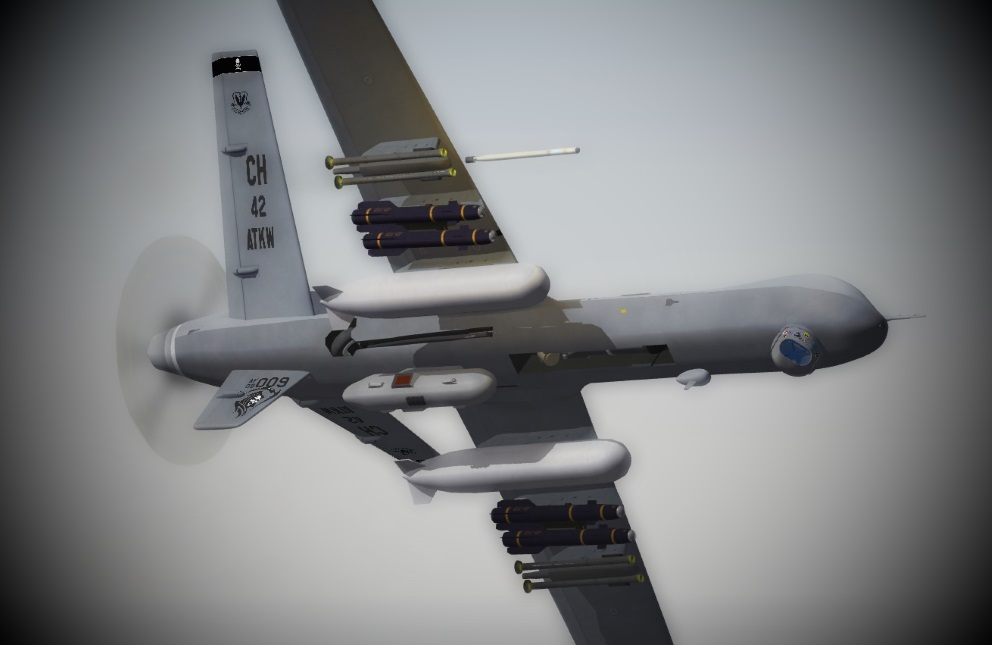
The General Atomics MQ-9 Block 30 Reaper refers to a version of the MQ-9 Reaper Unmanned Aircraft System (UAS) that uses the Block 30 Ground Control Station (GCS), a key component of the overall system for controlling sensors and weapons on the remotely piloted aircraft. The MQ-9 Block 30 GCS is part of the U.S. Air Force’s evolutionary acquisition approach for the MQ-9 program, focusing on integrating and evolving the capabilities of the aircraft and its control stations over time.

The General Atomics MQ-9 Reaper (sometimes called Predator B) is a medium-altitude long-endurance unmanned aerial vehicle (UAV, one component of an unmanned aircraft system (UAS)) capable of remotely controlled or autonomous flight operations, developed by General Atomics Aeronautical Systems (GA-ASI) primarily for the United States Air Force (USAF). The MQ-9 and other UAVs are referred to as Remotely Piloted Vehicles/Aircraft (RPV/RPA) by the USAF to indicate ground control by humans.